Thursday, 24 March 2011

Finale


"Music in itself carries a whole set of messages which are very, very rich and complex, and the words either serve to exclude certain ones or point up certain others."- Brian Eno.

-


Looking back on the research, planning, development, Shooting and Editing of my media product there are lots of things I would do differently. Our song choice was aimed at a very niche audience and this meant that the video had to be in a niche style. This meant going against most of the Keith Negus’s conventions that are laid out. We had to think of a music video that would go with the song and this particular song was not really like anything else we had heard before this showed to be an everlasting burden. Even when we constructed some ideas and found a location, it would fall through even when it looked like it could not. This happened to us on very short notice and so we had to think of another idea very quickly. In the end we shot in the studio with a very simplistic setting. However in saying that we also set out to create something original and different and to a certain level I believe that we achieved that.


If I had to go through the process again I would certainly choose a more mainstream song and conform to Negus’s conventions more. I think a mistake we made was being too ambitious in being original on our first try at producing and creating a pop video. As we set ourselves more of a challenge and completed it, we had the comfort of achievement.

Saturday, 19 March 2011

Blog Task 3: Audience – What I learnt from my audience feedback:

To evaluate audience feedback we took data from various sources. Some of these sources included a focus group of which we asked questions and family members who gave feedback. Throughout showing people the video I used open questions and realised this was a small scale trial of the video and the ancillary products.

Our target audience was A, B and C on the Jictar scale. We found through research and first-hand knowledge that bluegrass music appealed to more educated people who were ambitious. This maybe because the music is less easy to listen to and requires a bit more thought to get your head around the instrumentation and structure. Bluegrass music tends to attract an older audience as well. The people who listen to this type of music tend to be 35 or older. Bluegrass can appeal to both genders as it is purely judged musically and not on image.
We wanted to address a few points to the audience such weather they enjoyed the viewing or not and did they understand the message that we were trying to get across. The message of our song was about a girl who was running around recklessly and not thinking about the consequence. We tried to portray this through the spinning of the camera and the lively live performance.

For our focus group we had a group of intelligent and active 17 year olds. We had 11 people in our focus group. 4 of these people were girls and the other 7 were boys. We decided to have an open discussion with the focus group rather than a questionnaire as we felt they could express themselves more freely with speech. We also thought that this would be a good idea as a more serious approach would be taken if we spoke to them and this would give us better answers. At the start of the focus group we showed them the video so that is was fresh in their minds. After that we had a list of 10 questions prepared to ask. As we asked the questions we encouraged them to talk honestly and freely as we wanted the best feedback possible. If someone had an opinion about something then we would ask “does anyone disagree with this statement”.

The questions we asked were:
What did you think of the video overall?
What message do you think was being portrayed?
Do you agree with this message?
How is the each member of the band represented?
Did they think you had the potential to be stars?
Is the video entertaining?
Do you identify with any of the band members?
What do u think could be improved?
Did you find the spinning distracting?

The best responses were:
Do you identify with any of the band members?
No
Too old
Too niche market and to related.

Do you agree with this message?
Yes it looked like they were having fun

What message do you think was being portrayed?
Having a good time,
Fun and Care free

Did you find the spinning distracting?
Yes

Out of 10 what would you give it?

9/8/7 majority over 5 - only one said under 5 of which said 4
We tried to use the theory of Blumler and Katz on ‘uses and gratifications’ to asses our audience response. Blumler and Katz say that audiences respond in 4 ways. The question was did ours respond to our pop video in this way. Blumler and Katz listed 4 broad needs which need to be fulfilled by watching TV.

These are:
1. Diversion – a form of escape or emotional release from everyday pressures.
2. Personal Relationships – companionship via TV personalities and characters and sociability through discussion about TV with other people.
3. Personal Identity – the ability to compare one’s life with the characters and situations within programmes and hence explore personal problems and perspectives.
4. Surveillance - a supply of information about ‘what’s going on’ in the world.

Our video demonstrates diversion as it can be seen as an escape from everyday realities. This is displayed by the mise en scene having the same person in it twice. This would be impossible in real life however due to editing software we are able to create images that would otherwise not be possible. Our entire group agreed that the pop video was highly entertaining. Blumler and Katz say that a media text has to occupy the viewer for 70% of the time to be diverting. The 4 girls all agreed that they did not concentrate for 70%, however they still believed that they were diverted. The 7 boys all said that they were occupied for over 70% of the time.

Stuart Hall explains that there are different ways that the audience can interpret the product. There is a preferred meaning, a negotiated meaning and an oppositional meaning. Our video is aimed at a niche audience who like bluegrass music. This is usually people who are over the age of 35. An oppositional audience will oppose to the music as they would prefer something more commercial and easy to listen to. A negotiated audience will understand why people like the music however they will not choose to listen to it on a regular basis. A preferred audience will love the music and choose to listen to it on a regular basis.

Thursday, 17 March 2011

Director's Commentary-Audio Recording


This is Josh and me explaining what shots we used and why we used them. We went through the video before hand and critically analysed it and breaking it down, so we could explain it. Director's commentry are used so that the audience have a better understanding of the shots and to reveal what message the director was trying to get across.


Friday, 11 February 2011

Creation of Digipack

We used the same layout for the design of our digipack and our magazine advert. A digipack is a virtual booklet that is within a cd case, and is what usually comes with the CD. It usually contains the track list to the album, the lyrics to the songs and other details about the band. We went for the same layout as the magazine advert by having a faded vintage background with the same logos as last time. However our digipack contained the lyrics to the song and promotional pictures of the band to present them in a good light and promote their image.

The front cover to the digipack displays the band on stage with their instruments. The image is faded using effects in Photoshop, our editing and creation software.


The digipack is what people see the CD as, so when there in a shop the design needs to stand out, but also reflect on the bands image. The font that we used for our design was fairly wild to reflect off the message of the song, where a girl is running free and not caring.
The first inlay has the same background as the rest of the designs. There are 4 pictures of the band on this though. They are all close ups on the bands instruments, all in black and white except the top left. According to the rule of thrids, the eye reads fromt the left, so the first image that would be viewed would be the colour picture of one of the girl's.


The second inlay again carries the same background with the lyrics inside. The lyrics are placed on the left hand side of the page and two pictures are located on the right. One of them is an iconic Jack Daniel’s logo with the Toy Hearts writing. Below that is one of the Toy Hearts actual logos. This is a heart with ‘Toy Hearts’ logo, designed to look like a tatto.

The back cover displays the track list to the album. This panel displays the songs written by the band and gives the number of tracks on the album. Again we used the same vintage background and had a curly font. We used the picture of a double bass player in black and white with the same frame format to keep continuity. The black and white photo displays the bands elegance and promotes them in a proffesional way.

Creation of Magazine Advert

We wanted to promote the band as much as possible through the advert that we created so that record sales would be as high as possible. We tried to incorporate the bands image of being vintage with a modern twist into the advert as well to promote their image as well as their music. We decided to use a faded background which looked old and vintage and from that we started to layer up other ideas. The magazine advert contains the band’s name, contact details, a picture of the band and some iconic images to enhance their image. We used a photo of the band where they are all standing on stage with their instruments. We then used effects to fade the picture on Photoshop. We used four images to fill out the rest of the advert as well. We have a picture of a cartoon woman who is a sex icon, from the 1950’s and underneath that we have placed an old Coca Cola sticker. We also got a picture of an American flag to symbolise the type of music that the band make (South American Folk). We have also placed some pictures of playing cards to fill out the page a bit. Tour dates are on the right hand side of the advert, with different venues and times. We felt it was important to keep it simple because it would not be viewed for long, so we needed as little information as possible so that it is more likely that the reader will remember it.Using the rule of thirds can help this. We laid out the design so that the eye line would cross the girls face first and then the tour dates along with the picture of the band.The software we used to create the advert was Photoshop. This software enabled us to completely create the poster.

Wednesday, 9 February 2011

Blog Task 1, In what ways do your media products use, develop or challenge forms and conventions of real media products?

For our pop video, we researched different bands of a similar style of music to our band. One of these was ‘Little Lion Man’ by ‘Mumford and Sons’. http://www.mumfordandsons.com/. http://www.youtube.com/watch?v=X7bHe--mp1g We also looked at various other blue grass bands and singers from the USA, and various folk singers in the UK. these included people like Joan Baez and Bob Dylan, Peter Seeger, Johnny Cash etc..


We viewed the video of the Mumfords and then deconstructed it to see how it made and what made it effective. We then discussed how we could use some of these techniques in our video and started to build upon a few ideas. Keith Negus says that there are 11 major conventions that make up a pop video:
• The explicit and unashamed promotions of the artist’s image as a specific product with a brand identity, ready for mass consumption
• The featuring of the artist
• A wide and extensive use of shot types, camera angles and movement.
• Repetition of reoccurring thematic elements and generically specific iconography
• A possible narrative structure
• A possible performance element
• The flexibility to disregard realism
• Shots cut tightly to the beat of the track
• Use of special effects such as lighting, animations, CGIs, in camera effects
• A carefully constructed mise en scene appropriate to the content and tone of the track
• High impact instantly.
We looked to imitate the pop videos that we researched to give plaisir, the pleasure of the expected and also subvert the conventions in order to give jouissance, something new or unexpected in Barthes terms.

Folk music and blue grass such as the Mumford pop video is much more about the performance, the atmospher, the feel of the band and the particular message of the song rather than any comercial exhibitionism, as Carlesson calls it. so we knew that our pop video would have to explore the characters of the band members through the performance to add to the message. The digipak cover and the magazine advert were there to build on that atmosphere and nature of the band.


The message to our song is about a girl who is care free and enjoying life whilst not thinking about the consequences. The song is mainly about having fun and not caring what other people think. Our video was mainly performance based; however the camera was always spinning, creating an exciting feel to go with the upbeat tempo of the track. We have a shot of a bar with people drinking and listening to the band and having a good time. This was to reinforce the idea that the song was about having fun and not thinking about the consequences. Our band has a very South American Folk feel to them. They describe themselves as vintage with a modern twist. We tried to convey this by having shots of the band drinking Jack Daniel’s and shots of folk instruments such as the banjo. the Coca cola image and the Jack Daniels lable are so iconic of American and also the south where this type of music comes from, that we were able to use them to immediately connete the image we wanted to.

This was the last shot used in the video, it is the whole band about to bow to the audience. In the mise en scene the band are elegantly lined up, gracefully holding their instruments demonstrating their vintage feel. They are displayed as proper musicians who write and perform all of their music themselves. The band look at themselves as vintage with a modern twist with the girls at the front of the band as the singers and therefore the main part of the image. So using the rule of thirds they are in the reading line so that they are one of the first things that a viewer would see. The lighting we used in this was to directly light the subjects so that there was no other distractions on the screen. We did this so we did not over complicate the shots as the camera was always moving and it might be too much for the audience to take in if there is a busy background as well.


This shot demonstrates the flexibility to disregard realism which is one of Keith Negus’s conventions of making a pop video. The shot displays the same person in the mise en scene, something that would be impossible in real life. This songs meaning is about a girl who is running wild and care free and this shot enhances the meaning of not caring and running wild. There are lots of shots of the two girls as they are one of the attractions to the audience and this would hopefully create more of a high impact and so keep people watching if they were flicking through music videos. Having a high impact is another one of Keith Negus’s common generic conventions. We were trying to imitate this convention of a pop video.

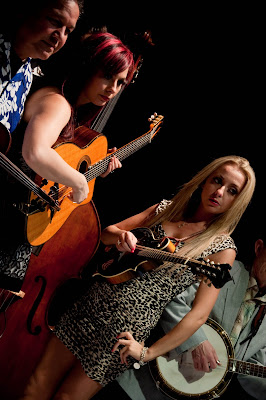
This next shot shows the two girls playing their instruments and singing together. They are constantly shown as part of the explicit and unashamed promotion of the band. They are the two centre pieces of the band and are shown to be the main selling point. The song could be written about these girls as it suggests that a girl is running wild and having fun and we tried to portray this in our video by having a playful performance by the two girls. We also used a constant pan in our video to try and make the video more exiting and match up with the meaning of the song better. In our video we shot different lengths, for example we shot close ups, mid-shots and wide-shots. Here we decided to use a midshot, mainly focusing on the girls guitars.

Then next shot is of the banjo player. This shot displays him sitting in an arm chair next to his banjo. This was visually pleasing and appropriate to the mise en scene and to the message of the song. This shot displays the bands relaxed attitude to playing and shows that they do not care what other people think. The fact that shot is being panned as well, gives a more exiting effect and reinforces one of Keith Negus’s conventions to disregard realism.

We decided to try and make the promotional poster simple but effective. The bands image is vintage with a modern twist on American folk music. The background to our poster was an old, faded piece of paper which looked almost like a cartoon pirate map. We then got a 1940’s Coca-Cola logo, a cartoon lady and some playing cards and placed these in the left hand side of the poster. We did this on the rule of thirds so the eye line would see the attractive woman first. We then had tour dates on the right hand side, with sold out logo’s over them. Finally we had the band’s name at the top of the poster. The colours used in our poster are quite faded to make the design look older and more vintage.

The next photo is one of the panels from digipack that we made. We used the same design as the poster to keep continuity. However we placed a picture of the band on stage into the design. We used effects on Photoshop to make the image look more faded. We also used the same text for the band name to keep continuity and the same pictures. The vintage feel of the colours reinforces the bands image of being vintage with a modern twist.
This is another panel from the digipack and has the same template as the last two pictures, however this panel has the track list of the album and a black and white picture of the double bass player. This again reinforces the bands image of being vintage. Different font has been used to the name of the band on the poster. A more elegant and encrypted font has been chosen to enhance the elegance of the music.

Task 4: New media technologies: A director’s commentary on how I used new media technologies in the construction and research, planning and evaluation

'Dital Technology rules the world and then some', says Nicholas Negroponte, a proffesor at MIT in the USA. New media technology is digital technology and it enabled us to work quicker, faster, better and to be far more creative from start to finish of our production.

I will analyse how new media helped in all five stages of the production. But I noticed especially how useful it was at the shooting stage in terms of ratio. This is the relationship between the number of shots taken in the rushes (363) compared to the number of shots actually used in the final cut (41), which gives you a ratio of 9:1. By having this many shots we could be more creative in the editing. we had this many shots because the digital camera is so small, easy to move and is very easy to light for. Digital technology our production indeed.

New media technologies are recently discovered electronics which are more efficient and better quality. Digital technologies use binary code which transfers information via a code combined of ones and zeros.
This is a big step from analogue technology which was slow, low quality and expensive. New media technology enables film crews to shoot more material, with better quality, less lighting time and to edit it more easily. Our group used new media technologies at all stages of production. The internet was used as a research base for looking up are group’s genre of music. When construction our shoot we used high definition digital camera’s for a clear and pristine picture. For editing we use final cut pro and color.

Maltby’s 5 stages of production are: research and development, planning, construction, post production and distributions. New media technologies are used in all of these stages of planning and were a vital part of the overall construction of our music video. New media technology was important at every stage and made the process quicker, easier and more effective.
For our research we used the internet to look up the competition and what was in the bands previous video. We also looked up the genre of music that our band played. We found that their style was a kind of south American bluegrass. So we needed to create this feel in our video. We were able to contact the band via email as well to send them our ideas. This then allowed us to create a video that we thought the band would like as well. They also sent us some suggestions over which we took into consideration and developed ideas on top of those or incorporated them with some ideas we already had. New media technologies such as email and the internet made are life a lot easier as research was easily accessible and fast contact was also possible and this led to more prepared planning.


For our original location myself and anther group member went to take pictures to plan out which rooms we were going to use on the day of the shoot. The digital camera we used is based on new media technologies. Unfortunately we were not able to film there due to complaints about the noise vibrations. However we did take advantage of digital cameras so that we could have a plan and if we had the location it would of helped us massively. We would of also constructed a storyboard using our digital pictures if we were allowed to shoot on that particular location.
On the actual shoot day we used a digital camera, the Sony Z1 and DSR 570, which are very mobile and this allowed us to shoot more shots and therefore have a bigger variety to choose from when it came to editing. Overall our group finished with 147 shots and we were able to view these shots easily and quickly using Final Cut Pro. Since we had a ratio of 4:1 we could be very creative. The high ratio means we could choose from 4 shots to every one the 35 that we eventually put in out film. So due to new media technologies there are lot more possibilities of what we can do and these are much faster and better quality than older technologies. We also had are camera linked to a flat screen T.V behind the set so people could see what the footage looked like on a big screen in the rough. Since our camera’s were so small and compact and easy to move, we could try various tracking and crane shots without worrying about involved lighting setup’s. This meant that when we had done a 2 shot from the front of the two girl singers we could then do a side shot of each and a high shot and a tracking shot because it did not take that much time.
Due to new media technologies editing was made a lot easier as we were able to view the footage very easily and then cut it quickly so that it was ready for constructing the music video. Are footage was uploaded to final cut pro and this program allowed us to use effects such as edge wipe and change the colour gradient. This would have been very hard to do when cutting the actual 35mm film and would of taken much longer. Therefore new media technologies are more efficient, faster and better quality as digital triples the quality analogue.
Distribution can be used through new media technologies such as the internet and email. Websites such as ‘YouTube’ can be used for viewing and distributing a video online with very easy access.

Due to the internet videos can be easily watched and therefore it will help spread the hype about a band. New media technologies also help with advertising and marketing a product. We used YouTube to upload are video so that a worldwide audience could view it and also a comment box is accessible so that comments and feedback may be left. Overall New Media technologies have made a lot more things possible due to their increasing efficiency and compatible size which makes film making easier. Thanks to camera’s becoming smaller and more mobile more footage is able to be shot and therefore more material to choose from when editing. Software such as final cut pro has made editing easier and more ideal and the internet has allowed us to have viral distribution and marketing which is simple but effective. In all stages of planning I have used new media technologies as they are quick and efficient.

Wednesday, 15 December 2010

EDITING BLOG

http://www.youtube.com/user/hurtwoodhousemedia - This is a link to the Hurtwood House page on youtube, where all the video's will be. Since our pop video was put up, there have been disagreements with the group and so for diplomacy it is down at present.

Overall about 8 weeks has been spent on preparing our video. So far 3 of those weeks have been editing. We have probably spent about 3 to 6 hours on editing a week during those 3 weeks, including staying late to try and finish it. We have had a lot of problems along the way which include loosing locations and idea changes. The equipment used includes Final Cut Pro, Adobe After Effects and Color. The first thing we did was go through all of our clips on final cut pro and put them in separate bins according to what they were. For example we would have a bin for shots that we could not use, a bin for wide shots, guitar solos and so on. After arranging all of the clips we started to build our video.
The first step we took to actually editing the video was to lay down a wide shot of the whole song and inter cut from there. This however proved to be difficult as our video was constantly spinning so we needed to cut on the black. This led to a number of problems such as wrong timings and different colour shades, but we managed to find a way around it using techniques such as dissolving the clips and speeding them up so they would be in time. We did not use our storyboard as our idea had to change at the last minute because we lost our location on very short notice. We went about the editing to try and make it creative and original but at the same time so it would work.
During editing we found that one of our experiments worked. This is where there was an instrument solo and we would cut it so that the only person in the mise en scene was the person playing the instrumental solo. This meant that we would see the same person in the mise en scene twice, which added to the unusual atmosphere of the track. We found it to be aesthetically pleasing as well to watch. We eventually came to our first assembly where there were still mistakes and errors that need correcting, however the basics of the video were in place. An example of some of the problems we had were different shades of black during the cuts, out of sync instrument playing and scrappy cutting in other areas.

We came to the fine cut by clearing up our mistakes that I mentioned previously and changed a few things to look better. We cleared up all of the scrappy cuts that we had in our video to make them look professional and seamless, changed a few clips, and sped up some of the shots to again create an unusual effect. We then previewed our video to our teacher, who made a few suggestions of things we needed to change and then after we received his approval, prior to fixing these issues we were able to then load it up into Color. In Color we were just trying to get the colours right and the shades and tones to look as natural and as professional as possible.
The style of music we are making a music video for is bluegrass and this is typically different from the usual types of pop videos. This meant that because our music was different and unusual our video had to match that sort of feel. Because our location was taken away from us on short notice we decided to go for a minimalistic approach to our video.This meant that we needed to think of an interesting concept, so we came up with the idea of rotating the camera clockwise in the middle of the band who would be surrounding it. The meaning of the song is about a girl who is reckless in her approach to life and is all about having fun. We needed to support and convey this meaning through our pop video which meant making it fun as well as minimalistic.

The band we were filming are a real band and they already have an ‘image’. This is a vintage feel with a modern twist, and we had to try and express this in our video. This is a shot of the whole band before they bow. We panned across them to keep the continuity of the video. This is the last shot we see and therefore will be the last image of the band in the audiences mind. This shows the certain style of dress that they wear which is clearly modern clothing.

With the photo below of the man playing the banjo we again panned the shot from left to right. So at the beginning the man appears from the right hand side and moves to the left as we filmed it clockwise. This was to try and make the band seem more rebellious as they are appearing against our eye line that we naturally read along. This is one of my favourite shots of the video as it portrays the bands image further by having an aged experienced musician showing his passion for music through playing his instrument.
Our editing style was slow paced to match the rythm of the music. We cut to the beat in places and against it in others. We had shot with gentle tracks and a gentle shapes of the violin and the double bass and so held on those shapes for slightly longer on some shots. Similarly our close ups of the two women and the man were one to two seconds longer to emphasis they were the key characters.
Our edit style at both first assembly and fine cut was especially concerned to stress these elements.


The next shot displays two girls that were in the band playing together. They again appear from the right of the mise en scene, suggesting that they are disobedient and careless which helps add to the whole bands image and the meaning of the actual song. These two girls will also be selling points as they are young and attractive to men so this will again add to the appeal and interest of the band.

The next screen shot displays one of the girls in the mise en scene twice using the edge wipe function on Final Cut Pro. We did this a lot in our video when editing to make the shots work. This also makes the video seem more interesting as it confuses the audience but it is the pleasure of the unexpected.

Continuity editing is when everything co-ordinates with itself and all the shots are cut to the beat. In some cases the shots will not be cut to the beat but say if the first one was a second after the beat, then in continuity editing the rest of the shots would be a second after the beat as well. Discontinuity editing is when things are different. For example if on shot was cut to the beat then the next one will not be. This can create a more interesting video as sometimes continuity editing can make videos look very robotic with not much flow, however discontinuity editing can create different and more exiting and overall give a more natural and human feel. We therefore in are video used discontinuity editing to try and make it more aesthetically pleasing for the audience. An example of the discontinuity editing is the picture above where the same person is in the mise en scene at one time. The picture above shows the discontinuity of our editing.
According to Keith Negus there are 11 key areas and common generic conventions that should be used in pop videos: The explicit and unashamed promotion of the artist’s image is the first one, and we have tried to do this trough are video by using 360 pans of the band members. We used wide shots, mid shots and close ups. The second one is the featuring of the artist, which we have done explicitly by using close ups, mid shots and wide shots. This also covers the third point of using extensive shot types and movement. Almost all of our shots are moving, with a small number of exceptions. We also have repetition of reoccurring thematic elements (using the 360 pan constantly). In our video we do not have a narrative structure, but we use a performance element the whole way through. We have definitely used the flexibility to disregard realism by using the same person in the mise en scene. We do not have many shots that cut tightly to the beat of the track and no real use of special effects apart from lighting tones. We have a carefully constructed mise en scene, by having unusual sequences and distorting cuts. The last of Negus’s conventions is high impact instantly.

Monday, 29 November 2010

ACCOUNT OF SHOOT DAY

We shot for one day in our school studio. We had the previous afternoon to build the set. We had two hours after shooting to strike the set.

At the start of the day we were preparing the props for the set. We drew the black curtain around 360 degrees to that the camera could rotate within the circle. We then set up a make-up area for the band to prepare. When the Toy Hearts arrived we helped carry out their instruments and made them feel comfortable within the environment. We ran through our idea to the band and explained what was going to happen and what the finished product would hopefully look like. We then positioned the band within the circle to the marked out places for them to stand. We then lit them from above, trying to create as little shadow as possible. Then one of us had to go inside the curtain and film by rotating the camera on a dolly. Only one of us could go in at a time, so we took it in turns to go in, while we were not on set we would as a group take it in turns to control the sound and keep the offset band members happy. We would also be preparing the other props and ensuring that they were ready for later.


For the set of the bar we used a jukebox, a couple of chairs and we stacked up some boxes to create a bar. The band where then playing in the bar. After building the set of the bar and shooting the scene we set up close ups and mid shots of all the band playing their individual parts and the solo’s that are in the song. After this we shot the band bowing and the two girls saying ‘meaow’ to the camera. After shooting in the black circle we set up a stage in the studio with some theatre seats in them. We then had a crowd of people watching them perform on stage and again did a sweeping pan to the right. After this we did a series of close ups of each of the band members on the stage.


During the whole day we rotated the roles that we had to play so that we had a go at doing everything. This included the camerawork, the sound, the directing, organising the band and arranging the props. When preparing for our shoot we had to clean out a jukebox and glue some of the parts back together. As our set was very minimalistic this would have been one of the main things that stood out so it needed to be properly fixed. We only used mini blonde lights to spotlight the musicians to try and create as little shadows as possible. A cherry picker was used to move the mini blondes about and place them on the frames that overhang the studio.


The shots we were taking were 360 pans of the black circle with the band performing the whole way through. We did this a couple of times on wide shot, mid shot, and some close ups of the instruments all at a sweeping pan to the right. After lunch we had to quickly prepare the set so that it looked like a bar and for this we enlisted some actors.We kept to the same style of filming and camera work to keep the continuity of the video We used the camera so that it was in the middle of the band on a dolly and when we were filming we would turn it on a dolly. We used a different variety of shots using this style of filming. All of the tracks we used were clockwise to keep continuity.
As a group we faced a series of problems. At first we struggled to get any location for our band to play in. We wanted an old theatre or a run down building that looked old and authentic. Eventually our lighting designer Dan found as a location called ‘The Grange’ which was a massive derelict house which used to owned by a lord. This was the perfect location for our video. Another group were filming on the same location before us and half way through the shoot a man walked in and complained about the vibrations caused by the music as it was disturbing the bats which lived in the roof. Our group could therefore not shoot on that location and so we had to find another location on very short notice. We could not find anything which was within our price range or distance that was suitable so this meant we had to shoot in the studio.

Our idea therefore had to change as well as we were shooting in the studio and had not set. As a group we sat down and decided upon a new idea. We came up with concept of filming within a black circle with the band on the outside. We used a black curtain so that with the spaces between the band members we could cut more easily when editing. We encountered more problems when trying to do this as the camera was on a dolly and was always rotating, but the ground was uneven which meant on playback it looked like there was a jump. We dealt with this by laying down some flat pieces of wood, which made the ground more even. Because our idea changed at the last minute this meant that all the pre-planning we had done, including the storyboard, shoot schedule and timeline could not be used so this meant that on the day we had to be much more aware and active to make sure that everything ran on time. We did however over run our shoot past dinner and carried on filming later than all of the other groups. Another problem we encountered was that the song that the ‘Toy Hearts’ had chosen to play was actually really difficult as it was at a very high tempo. This meant that on the day, there are quite a few errors musically and this will be difficult to edit. Overall it turned out ok though.
One of the main problems on the actual shoot day was that the only person who could see what was being filmed were the two people manning the cameras, so the rest of the group could not see as they were behind the black curtain. This was because we could not have a cable from the camera to the TV screen as a live feed as we were filming the whole song at once and we were moving in a 360 movement so the cable would have got twisted in it.We therefore just had to film it without live playback.
I felt that a shot that really worked was the tracking of the pub which then stopped on the band playing. I felt it gave real atmosphere to the overall video and gave a sense of authenticity to the video.It also work really well within the context of the video and creates more variety among the choices of shots we can use in editing which will make the overall video better.

I feel our shots worked really well as we used the dolly to full effect on the day of filming. Because our video is always moving (360 track to the right) I felt the wide shot of a continuous track throughout the whole song worked really well and it was different to a lot of other music videos that I have seen before. This means that it has a sense of originality and therefore can create more of an interest among an audience.
A shot that I felt did not work was a mid-shot of the band playing in the black circle. For some reason I felt that without seeing the band members faces the shots did not work. However they make look better during editing if they are cut with shots of their faces. Other shots that I felt did not work were the close ups of the band performing on the stage. This was because the rest of the video was tracking to the right continuously and this would disrupt the flow if that happened.

Overall I thought that our shoot day went really well and even though there were problems we faced them and dealt with them quickly. Considering our idea changed at the last minute we were very organised on the day despite running over time a little bit. Most of the shots we filmed looked good and our group was happy with them.

Wednesday, 17 November 2010

PERMISION'S LETTER


We were legally and morally bound to seek permission from the copyright owner of the song so that we could not only record our pop video using that song. But could also publish the song on YouTube and other sites.

This is the letter that went to the Toy Hearts company which owned the copyright.

THE STRUCTURE OF THE MUSIC INDUSTRY, AND HOW MY POP VIDEO FITS IN

Musical taste varies a lot between different types of people. Music can be seen as almost tribal as some people choose their lifestyle around a certain genre of music. For example the band Iron Maiden has created a fan base that is usually associated with the biker gang, hells angels. Music can shape the way that people think, dress and speak. Most people, however, agree that music and its trends, sit at the epicentre of popular culture. There are two different types of culture (Higher culture and lower culture). An example of higher culture in music would be Steve Reich as his sound is unique and it targets a very particular audience, whereas someone like Lady Gaga would target a wider and a more commercial audience. Music can influence people up to an extent of a global community being changed by the musical trends.

There are two different types of music in the industry (synthetic and organic). Synthetic music are people such as the Spice Girls and Destiny’s Child, whereas organic music would be artist like Four Tet and Burial. In the music industry there is a dynamic tension between the organic and synthetic style of music. Some critics believe that ‘music’ and ‘industry’ are in many ways incompatible terms. There is dynamic tension between the artistic and commercial forces that underpins the success of the vast media business. Another characteristic to take into account is the music industries ‘synergetic connections’ with other media forms such as TV, Radio and Magazines. For example a band may want to promote themselves through other types of media to sell their product. TV shows like ‘The One Show’ and ‘Late Night with Jools Holland’ would be good for promoting the band we are filming (The Toy Hearts).
This is a link to the later with Jools Holland official web page:
Radio shows such as ‘BBC 6 Music’ and ‘BBC Radio 2’ would be ideal for our band as they are targeting a niche audience. ‘Country Life’ Magazine would be suitable for a Toy Hearts interview as well. A mutual reliance can be formed which can lead to positive promotion, however this is risky as a negative review may be documented and this could decrease sales.

A pop video is only one part of the marketing campaign in terms of promotion. There are other aspects such as gigs and reviews. The music industry is overall dominated by 4 major record labels. These are Universal, Sony, Warner Bros and EMI. All of these companies are known as the ‘major’ record labels. They are also known as trans-national corporations. Each of these record labels will own smaller more independent record labels of which they can produce smaller and more alternative bands. They will also own magazines, radio stations and TV stations. This gives them an advantage as they can get their artists the best locations within the magazine, or an exclusive review on their radio station or TV show. This means that all of their departments of the company are helping out the artist and trying to spread popularity and increase sales.

The smaller companies that the major record labels own are called subsidiary companies or ‘major independents’ and they are there to reach different kinds of audiences in different areas of the world. There are also lots of smaller companies with little or no financial connection to the majors. These companies will concentrate more on the organic music which is created for niche audiences. These companies are known as independents. Major Record Labels will spend about £1 Million on an album and about £500,000 on a music video. An independent will spend around £100,000 on an album and £50,000 on a video. This shows that the major record labels have much more money than the independents and can afford to produce projects on a larger scale.
As a whole, the industry has a complex connection with lots of different types of media (Such as Radio, TV, Film and Magazines). When a company is trying to sell the band they will deliver a song and the meaning to that song. This helps create the image or the brand for the band itself. The use of synergy within companies can give various artists massive advantages as they can be in magazines and interview on TV or radio. The music video can help create synergy and also serve a number of different functions. For example a video can promote a specific single or the album itself and help establish the band. It can create a star image of which people look up to and aspire to be like. A video will also be entertaining in itself, and can reinforce the meaning of the song through visual images.

There are however certain threats upon the concept of music videos. In some cases they are becoming obsolete and irrelevant. Due to the rapid increase of illegal downloading people are paying less attention the actual video of the song. Websites such as ‘My space’ and ‘soundcloud’ are allowing people to stream and download for free people’s tracks that they have made. This imposes a serious threat for music videos as people will not be looking on music channels for new songs, but online, so there will usually be no accompanying video. I still believe that there will always be a future for the pop video. The website ‘Youtube’ allows people to listen to the music, but also watch the video that goes with it and some people prefer this than to just listen to the music.

Tuesday, 9 November 2010

CALL SHEET

We spent a week preparing a detailed Call Sheet, which is the detailed plan for the shoot day. It is like the bible for the productin with details of the shooting schedual, the locations , the cast, the equipment, contact numbers, anything and everthing that might arise and that people involved would need to know. Below is the Call Sheet we prepared.

CALL SHEET INFORMATION

The call sheet is a booklet of information that is constantly referred to on the day of the shoot. Contents of the call sheet include production team, cast list; studio set plan, lighting plan, props and wardrobe list, schedule, storyboard, words of song and shooting order. We will give out a booklet to everyone involved in the shoot on the day, so that they know what is happening, where and what time it is at.

The studio set plan is there to show the cast and the production team where everything is meant to be and where everyone is standing. The lighting plan shows where we will need to set up lighting, to create the effect that we want. The props and wardrobe list will be there as a checklist to make sure we have everything. The schedule shows when everything is taking place and what order we are shooting in. The storyboard is for the production team to direct the cast of what they want to do. The words of the song are there so that we can refer to them when shooting at different points in the song and we have a shooting order to let everyone know what time everything is taking place.

Monday, 8 November 2010

PROBLEMS WE ENCOUNTERED

When looking of a location we were a bit stuck as there was no where suitable to shoot. This was due to issues such as cost or distance. However our lighting designer, Dan, was able to find us a location called The Grange. Last Friday Storm and I went to the location to do some research as someone else was shooting their video there. We encountered a problem when a man walked in on the middle of the shoot and said that we were not allowed to make loud noises, as the vibrations were disturbing the bats that lived in the roof. This therefore means that the location we had, which was perfect for what we were trying do, is no longer available.


Now as a group we have to manipulate our idea, so that it can work somewhere else and we can get the same feel as if we were at the grange. Our group is looking for locations at a low price, however if we can not find anything suitable then we will have to build a set in the studio to try and imitate an old house.